
Black teeth in Vietnam: the history of teeth blackening
Teeth blackening was once a sign of beauty and adulthood in Vietnam. Here's what it was, how it was done, how far back it goes, and why you may still see black teeth among some older people.
Plan my tripKey points
- Black teeth in Vietnam are usually the result of teeth blackening, a deliberate custom once seen as a sign of beauty, maturity and civilisation.
- Archaeologists have found evidence of the practice in northern Vietnam from about 2,000 years ago, in the Iron Age.
- The custom declined through the 20th century. Today you're most likely to see black teeth among some older women and in some ethnic minority communities.
- A small laboratory study found that soot used by the Kammu people to blacken teeth inhibited a decay-causing bacterium, but that isn't evidence that the practice prevents tooth decay.
Black teeth in Vietnam are usually the result of teeth blackening, a custom in which a dark dye was applied to the teeth on purpose. For centuries it was seen as a sign of beauty, adulthood and civilisation, and in the early 20th century most women in Hanoi reportedly had blackened teeth. The custom faded through the 20th century, so today you're most likely to see black teeth among some older people and in some ethnic minority communities.
If you're visiting Vietnam for dental treatment, you may notice it, especially in the north and in the countryside. This guide explains what teeth blackening was, how far back it goes, how it was done, and what it meant for dental health.
What teeth blackening was
Teeth blackening was a deliberate cosmetic practice. A dye was applied to the teeth, often over days or weeks, until they turned a deep, glossy black. It was usually done around puberty, as a sign of the move into adulthood.
The custom wasn't unique to Vietnam. Archaeology magazine notes that blackened teeth were seen as beautiful in parts of Asia, Africa, Oceania and the Americas. In Vietnam it was especially widespread: a colonial medical report from the 1930s, cited in Nguyễn Đình Hoà's 1999 book about Hanoi, From the City Inside the Red River, said 80 percent of farmers in Tonkin, the north of the country, had darkened teeth.
How old the practice is
For a long time it wasn't clear when teeth blackening began in Vietnam. Dark stains on old teeth can also come from diet, especially from chewing betel.
A study published in 2026 in Archaeological and Anthropological Sciences settled part of the question. Researchers examined discoloured teeth from people buried at Dong Xa, a late Dong Son period site in northern Vietnam. Chemical analysis of the enamel found iron and sulfur, the signature of iron salts. That points to deliberate blackening at least 2,000 years ago, in the Iron Age, when people had more access to iron.
| Period | What sources say |
|---|---|
| About 2,000 years ago | Evidence of deliberate blackening at Dong Xa, northern Vietnam |
| Early 20th century | Most women in Hanoi reportedly had blackened teeth in the 1920s |
| 1930s | A colonial report said 80 percent of farmers in Tonkin had darkened teeth |
| 20th century | The custom declined generation by generation |
| Today | Seen mainly among some older people and some ethnic minority groups |
How teeth were blackened
Methods varied between regions, families and periods, and the sources describe several.
- Iron and tannin. The method found at Dong Xa matches more recent practice: iron salts heated with tannin-rich plant extracts to make a black paste, applied to the teeth again and again over several weeks.
- Red, then black. One Vietnamese account, from Đoàn Triển's book on Vietnamese customs, describes applying a shellac mixture with betel leaves, which first turned the teeth red. Black alum was then applied several times to turn them black. Men dyed their teeth lightly, while women preferred a deep black.
- Soot from plants. The Kammu people of Laos and Vietnam burned the nuts or wood of three plants and applied the soot to the teeth with a finger, according to a 2006 study.
Preparation could be uncomfortable. One account describes rinsing with a mixture of rice wine and lemon juice before the dye, which often made the gums swell. Dyeing began after the baby teeth had fallen out, at around age ten or older.
Why people blackened their teeth
The sources give several reasons, and they overlap.
- Beauty. Black teeth were considered attractive, and for many women a deep, even black was the aim.
- Adulthood. Blackening around puberty marked the move from childhood to adulthood.
- Being human. A Vietnamese belief held that white teeth belonged to animals, savages and evil spirits, so blackened teeth were a mark of a civilised person.
- Healthy teeth. The Kammu people told researchers they blackened their teeth to be beautiful and free of decay.
Why the custom faded
Teeth blackening declined through the 20th century, generation by generation. Western influence during the French colonial period played a part.
You may still see black teeth among some older Vietnamese women, especially those from the north. Some ethnic minority groups have kept related customs. Among the Si La, for example, men have painted their teeth red and women black. The 2006 Kammu study found the practice was known only among elderly people in the villages the researchers visited.
Is teeth blackening good for your teeth?
The evidence is thin. The 2006 Kammu study tested soot from the three plants in the laboratory. Soot from one of them, Dracontomelon dao nuts, inhibited mutans streptococci, a bacterium linked to tooth decay, in saliva samples. It had no effect on the bacteria on agar plates.
That is a small laboratory result. It doesn't show that blackened teeth decay less in real life, and nobody should blacken their teeth for health reasons. If you're worried about decay, ask a dentist.
Seeing it on your trip
If you travel to Vietnam for dental treatment, you may notice black teeth among older people, especially in rural areas of the north. It's a personal and traditional choice, often made decades ago. Treat it as you would any other part of someone's appearance, and ask before taking photos of people.
If you want to learn more, our Hanoi guide and Northern Vietnam guide cover the region where the custom was most widespread. For the modern side of dental care in Vietnam, start with what dental tourism is.
Frequently asked questions
Why do some people in Vietnam have black teeth?
Most likely because of teeth blackening, a custom in which a dark dye was applied to the teeth. It was once widely seen in Vietnam as a sign of beauty and adulthood. Betel chewing can also stain teeth dark.
How old is teeth blackening in Vietnam?
A 2026 study of teeth from the Dong Xa site in northern Vietnam found evidence of deliberate blackening about 2,000 years old, from the late Dong Son period of the Iron Age.
How were teeth blackened in Vietnam?
Accounts differ by place and period. Recent methods used iron salts with tannin-rich plant extracts, applied as a paste over several weeks. One Vietnamese account describes first staining the teeth red with a shellac mixture, then applying black alum several times.
Why did people blacken their teeth?
Sources describe it as a sign of beauty, maturity and civilisation. One Vietnamese belief held that white teeth belonged to animals, savages and evil spirits. The Kammu people also blackened their teeth to keep them free of decay.
Do people still blacken their teeth in Vietnam?
Rarely. The practice declined through the 20th century. A 2006 study found it was known only among elderly Kammu people, and some ethnic minority groups such as the Si La have kept related customs.
Is it polite to ask about someone's black teeth?
It's a personal and traditional choice, often made decades ago. Treat it as you would any other part of someone's appearance, and don't take photos of people without asking.
Does teeth blackening prevent tooth decay?
There isn't good evidence that it does. A laboratory study found that soot from one plant used by the Kammu inhibited a decay-causing bacterium in saliva samples, but that's a long way from showing it protects teeth in people.
Sources
- Archaeology magazine, Archaeological Institute of America. Cosmetic tooth blackening dates back 2,000 years in Vietnam.
- Community Dentistry and Oral Epidemiology (Tayanin and Bratthall, 2006). Black teeth: beauty or caries prevention? Practice and beliefs of the Kammu people.
- Wikipedia. Tooth blackening.
This article is general information, not medical advice. A dentist who has examined you is the right person to recommend treatment.
More in Travel in Vietnam: While you're there
See all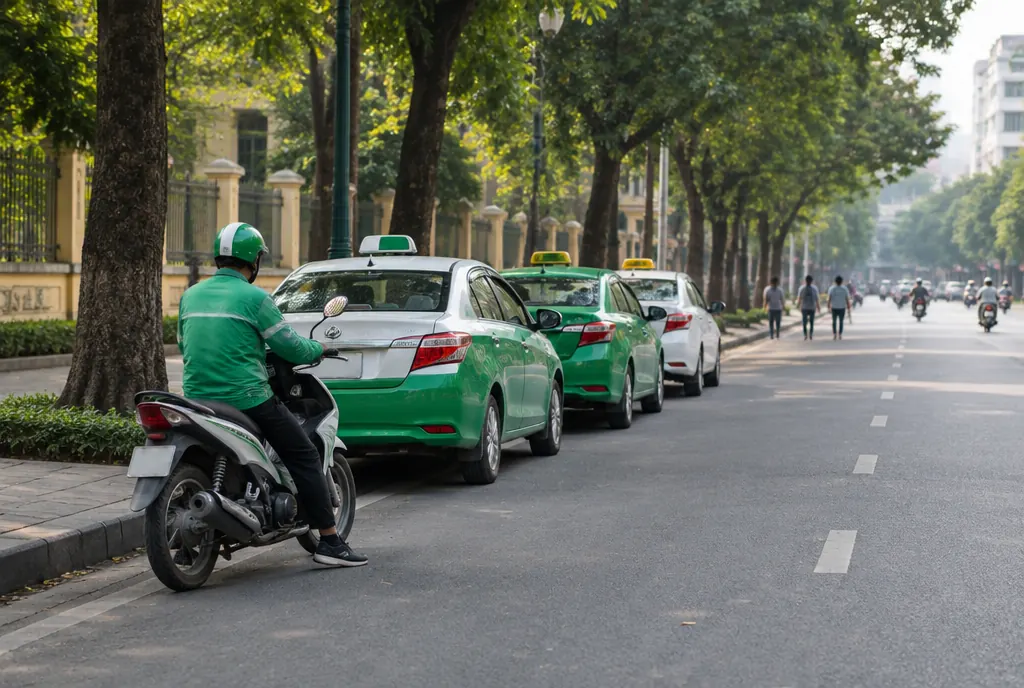 Getting around Vietnam: Grab, taxis and transport between dental appointmentsTransport in Vietnam for a treatment trip, from using Grab and taxis in the cities to travelling between Hanoi, Da Nang, Nha Trang and Ho Chi Minh City.
 What to eat after a tooth extraction or dental surgery, with soft Vietnamese foodWhat to eat after a tooth extraction, implant surgery or new crowns, day by day, with soft Vietnamese dishes that need little or no chewing and what to avoid.