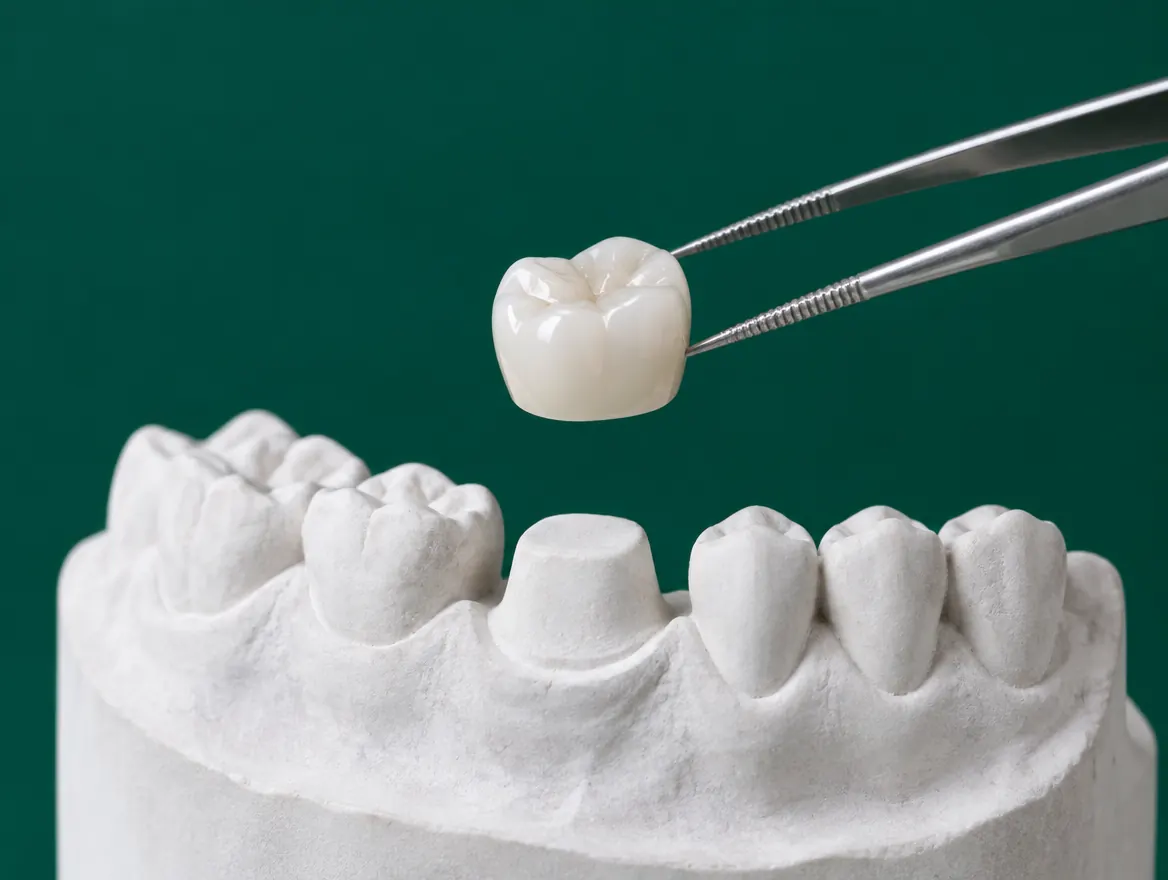
Crowns
A cap that covers a damaged or root-treated tooth to protect it and restore its shape.
Key points
- A crown covers a damaged or root-treated tooth.
- Zirconia suits back teeth, lithium disilicate looks more natural at the front.
- Most crowns take two visits a few days apart.
Top clinics for crowns
See allDemo Clinics marked Demo are examples that show how listings will look. They aren't real and can't be contacted.




A crown covers the whole visible part of a tooth. Dentists use crowns for teeth that are badly broken, heavily filled, or weakened after a root canal.
Materials
- Zirconia is strong and suits back teeth.
- Lithium disilicate (e.max) looks more natural and is often used at the front.
- Porcelain fused to metal is cheaper and long lasting, but can show a dark line at the gum.
Ask the clinic which material they propose for each tooth and why.
How the visits work
The tooth is prepared and scanned or moulded on the first visit, and you leave with a temporary crown. The permanent crown is fitted a few days later. Clinics with a milling machine can sometimes make a crown the same day.
Questions to ask the clinic
- Does the tooth need a root canal first?
- Is the lab in-house, and which brand of zirconia or ceramic do you use?
- What does the warranty cover?
Frequently asked questions
Does a tooth need a root canal before a crown?
Not always. The dentist decides after an examination and X-rays. If it does, expect one or two extra visits.
Sources
- American Dental Association (MouthHealthy). Crowns.
This article is general information, not medical advice. A dentist who has examined you is the right person to recommend treatment.