Dental implants abroad: what to check before you go
The checks that matter most when you have dental implants overseas, from the surgeon and the implant system to healing time, records to bring home and follow-up with your own dentist.
Plan my tripKey points
- Dental implants abroad usually mean two trips, because the bone needs time to heal around the implant before the final tooth goes on. MouthHealthy says this can take several months.
- Ask which brand and model of implant system the clinic uses, and keep the details. The US FDA advises this for every implant patient.
- See your own dentist before you go. The Australian Dental Association advises seeking a home dentist's advice before overseas treatment.
- Agree in writing how complications and follow-up will be handled once you're home, and who pays.
- Take copies of your X-rays, scans, treatment notes and implant details home with you.
Dental implants abroad can work well, but they need more planning than most dental treatment overseas. Implants usually take two trips, because the bone has to heal around the implant before the final tooth goes on, and any problem may appear after you're home. Before you book dental implants overseas, check who will place the implant, which implant system the clinic uses, how follow-up will work from a distance, and which records you'll bring home.
This guide covers the checks that matter for implants in any country. For how implant treatment works in Vietnam, see our dental implants guide.
Why implants are different from other treatment abroad
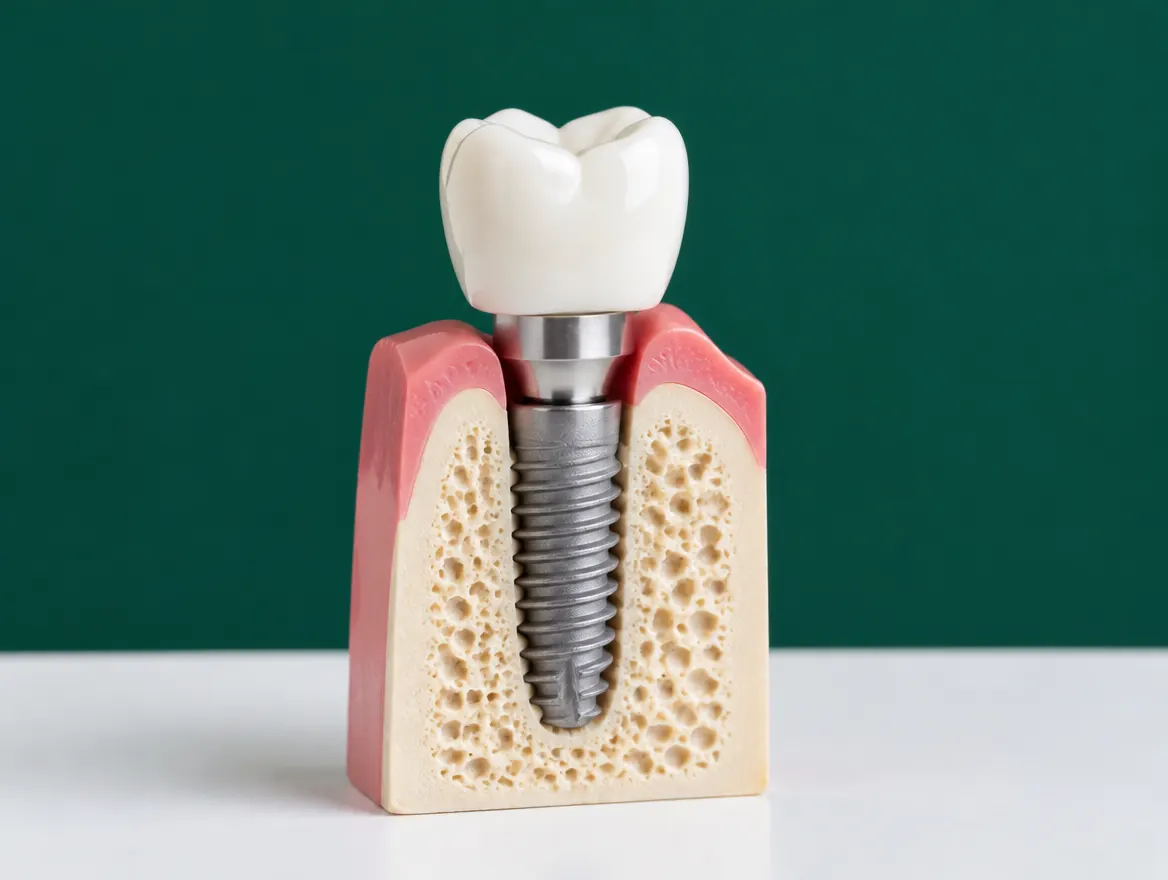
MouthHealthy, the American Dental Association's patient site, describes three stages: the implant is placed in the jawbone, the bone heals around it in a process called osseointegration, and then the artificial tooth or teeth are fitted. Some patients wait until the implant is completely integrated, which can take up to several months.
That has three consequences for a trip abroad:
| What's different | What it means for you |
|---|---|
| Healing takes months | Usually two trips, with the cost and time of both |
| Surgery is involved | Rest days after placement, and care before flying |
| Problems can appear later | Follow-up often happens at home, away from the clinic |
The NHS suggests factoring in exchange rates, possible longer stays and the cost of return trips when you work out whether treatment abroad saves money.
Before you go: the checks that matter
See your own dentist first. The Australian Dental Association advises seeking the advice of a dentist at home before considering overseas treatment. Your dentist can tell you whether implants are the right option and whether they're willing to help with follow-up.
Ask who places the implant. The Oral Health Foundation suggests asking who will carry out your treatment, what their qualifications are and how often they carry out the procedure. For implants, ask about the surgeon specifically.
Ask which implant system is used. The US Food and Drug Administration advises asking your dental provider "what brand and model of dental implant system is being used" and keeping the information. The CDC notes that medical devices used in other countries might not face the same regulatory scrutiny as at home, so this matters more abroad.
Ask about your health. The FDA suggests asking how your general health and smoking could affect healing and how long the implant lasts. MouthHealthy says your health matters more than your age, and that tobacco can slow healing.
Get the plan in writing. Ask for a written plan with each implant, the abutment and crown, the materials, the visits and the total price. Our guide to reading a dental quote shows what to look for.
Planning two trips
| Trip | What usually happens | What to plan |
|---|---|---|
| First | Examination, 3D scan, implant placement, healing check | Rest days after surgery, soft food, time before flying |
| Between trips | The bone heals around the implant | Follow the clinic's instructions, keep in touch about any problems |
| Second | The final crown or bridge is fitted and the bite checked | A few days for fitting and adjustments |
Ask your surgeon how soon you can fly after the implant is placed. Our guide to flying after dental treatment explains the usual waiting times. For a day-by-day example of both trips, try the trip planner.
Risks to understand before you agree
The FDA lists possible complications of implants, including:
- damage to nearby teeth or the jawbone during placement
- the implant not healing into the bone, or coming loose, sometimes from infection or delayed healing
- a loose abutment screw, or teeth that don't bite together normally
- numbness from nerve injury
- difficulty cleaning around the implant, and gum disease
Ask the clinic how it would handle each of these while you're still there, and once you're home. The CDC advises discussing the plan for complications with both your home provider and the overseas provider.
Records to bring home
The Australian Dental Association warns that records of treatment overseas are often unavailable to the dentist who treats you later. Before you leave the clinic, get:
- the brand and model of each implant, and the date it was placed (the FDA advises keeping these)
- copies of your X-rays and CBCT scan, ideally as files your dentist can open
- the treatment notes, in English
- the itemised invoice
- the written warranty and its conditions
The CDC recommends getting copies of your medical records in English and sharing them with the people who provide follow-up care. Our guide to dental X-rays and scans explains the file formats to ask for.
Follow-up at home
Implants need looking after for life. The FDA advises following your provider's hygiene instructions, keeping regular dental visits and telling your provider straight away if an implant feels loose or painful. It also advises telling imaging staff about your implants before an MRI or X-ray.
Before you travel, agree:
- which dentist at home will check the implants
- what the overseas clinic's warranty covers, and who pays for travel back if needed
- how to contact the clinic, and how quickly it replies
Our guides to dental warranties and aftercare once you're home cover these in more detail.
Checklist for dental implants abroad
- Your dentist at home has seen your X-rays and discussed the options
- You know who will place each implant, and their experience
- You know the brand and model of the implant system
- The plan, quote and warranty are in writing
- You've planned two trips, with rest days after surgery
- You know how complications will be handled, here and at home
- You have a dentist at home willing to do follow-up
- You'll bring home your records, scans and implant details
Every verified clinic on VietDentalTrip has passed our licence, dentist and address checks. How we verify clinics explains each one.
Frequently asked questions
Is it safe to get dental implants abroad?
It can be, with a qualified surgeon, a licensed clinic and enough time for healing. The risks are the same as at home, plus the difficulty of follow-up from a distance. The CDC notes that medical devices used in other countries might not face the same regulatory scrutiny, so ask which implant system is used.
How many trips do dental implants abroad take?
Usually two. The implant is placed on the first trip, the bone heals around it, and the crown is fitted on a second trip. MouthHealthy says some patients wait up to several months for the implant to fully integrate.
What implant details should I bring home?
The brand and model of the implant system, the date it was placed, and copies of your X-rays or scans and treatment notes. The FDA advises keeping the brand and model for your records.
Will my dentist at home look after implants placed abroad?
Ask before you travel. Your dentist will need your records and the implant details to maintain or repair the work, and some may be reluctant to take on work done elsewhere.
What if my implant feels loose after I get home?
Tell a dentist straight away. The FDA lists a loose or painful implant as a reason to contact your dental provider at once. Then contact the clinic that placed it about the warranty.
Can I have implants placed and the teeth fitted in one trip?
Sometimes, when the surgeon judges it suitable, but many patients need to wait for the bone to heal first. Ask the surgeon what your X-rays and scan show, and plan the trip around their answer.
Does insurance cover problems with implants placed overseas?
Often not fully. The Australian Dental Association notes that complications from elective overseas treatment are not always covered by travel insurance or Australian health funds. Check your policy before you book.
Should I tell imaging staff about my implants?
Yes. The FDA advises telling staff about dental implants before an MRI or X-ray, because implants can distort the images.
Sources
- US Food and Drug Administration. Dental implants, what you should know.
- American Dental Association (MouthHealthy). Implants.
- US Centers for Disease Control and Prevention. Medical tourism.
- Australian Dental Association. Policy Statement 2.2.6, Elective overseas dental treatment.
- Oral Health Foundation. Going abroad for dental treatment.
- NHS. Treatment abroad checklist.
This article is general information, not medical advice. A dentist who has examined you is the right person to recommend treatment.
More in Dental care in Vietnam: Dental implants explained
See allAll-on-4 dental implants: how they work, and having them done in VietnamHow All-on-4 dental implants replace a full arch of teeth with a fixed bridge on four implants, what the studies show, and how to plan the trips to a clinic in Vietnam. Full mouth dental implants: your options comparedThe ways to replace all your teeth with implants, from individual implants to fixed full-arch bridges and removable implant dentures, and how to plan treatment in Vietnam.
 Implant-supported dentures and snap-on dentures: how they workHow implant-supported and snap-on dentures clip onto implants, how many implants they need, the attachment types, the upkeep, and how treatment in Vietnam is planned.How long do dental implants last?How long dental implants last according to long-term studies, why the crown on top may need replacing before the implant, what raises the risk of failure, and how to look after an implant after treatment abroad.