
Implant-supported dentures and snap-on dentures: how they work
How implant-supported and snap-on dentures clip onto implants, how many implants they need, the attachment types, the upkeep, and how treatment in Vietnam is planned.
Plan my tripKey points
- An implant-supported denture, also called a snap-on denture or overdenture, is a removable denture that clips onto implants in the jaw.
- It stays in place far better than an ordinary denture. You still take it out to clean it.
- A lower snap-on denture on two implants has been described as a first-choice standard of care for people with no lower teeth since the McGill consensus statement in 2002.
- The attachments wear. Replacing worn nylon inserts is the most common maintenance job.
- Plan at least two trips to Vietnam, and find a dentist at home who can service the attachment system.
Implant-supported dentures, often called snap-on dentures, are removable dentures that clip onto implants in the jaw. The implants stop the denture slipping when you eat or talk, and you still take it out to clean it. A lower snap-on denture is often held by just two implants. Treatment in Vietnam usually takes at least two trips: one to place the implants, and one to fit the denture once they've healed.
How snap-on dentures work
An ordinary denture rests on the gums and is held by suction, the shape of the gums, or adhesive. The American Dental Association says follow-up visits are generally needed after a denture is fitted, and that implants can serve the same function as the teeth an overdenture fits over.
With an implant denture, attachments are fixed to the implants and matching parts sit inside the denture. When you press the denture into place, the parts click together. A review of attachment systems describes the main types:
| Attachment | How it holds | Notes from the review |
|---|---|---|
| Ball | A ball on the implant fits into a socket in the denture | The first type used, from the 1960s |
| Bar | A metal bar joins two or more implants, and a clip in the denture grips it | Links the implants together |
| Locator | A nylon insert in a metal cap in the denture clicks onto the abutment | Introduced in 2001 |
| Magnet | Magnets in the implant and denture | The least retentive, and now rarely used |
Ask your clinic which type it uses and why.
Snap-on dentures or ordinary dentures
A lower denture is often harder to wear than an upper one. A review of the McGill consensus notes that most people can tolerate an upper denture, but that lower dentures cause more instability and discomfort. That's why implants are often recommended for the lower jaw first.
The same review describes better chewing, speech and stability with implant-retained lower dentures, and says patients no longer worry about the denture coming loose while they talk or eat. It also notes they cost more upfront than conventional dentures.
| Ordinary denture | Snap-on denture | Fixed implant bridge | |
|---|---|---|---|
| Held by | Gums, suction, adhesive | Clips on implants | Screws on implants |
| Removable at home | Yes | Yes | No |
| Implants needed | None | Often two in the lower jaw, more in the upper | Usually four to six per jaw |
| Upkeep | Relines and adjustments | Replacing worn inserts, check-ups | Professional cleaning, check-ups |
If you'd rather have teeth that stay in, read All-on-4 dental implants and full mouth dental implants.
How many implants you need
In 2002 the McGill consensus statement described a lower denture on two implants as the first-choice standard of care for people with no lower teeth. A systematic review of mandibular implant dentures notes that one, two or four implants have all been recommended, and that the minimum number is still debated. Upper dentures generally need more implants. Your surgeon will decide from your CBCT scan and bone quality.
Living with an implant denture
Cleaning. The ADA advises brushing dentures daily, rinsing them first to remove food, and keeping them covered in water when they're out. Clean around the implant attachments too. A review of attachment systems notes that people with limited hand movement may need special cleaning aids.
Check-ups. The same review suggests check-ups every 3 to 4 months in the first year, every 6 months after that, and an X-ray once a year to check the bone around the implants.
Replacing inserts. The most common repair is replacing the nylon inserts as they wear and lose their grip. It's usually a quick job in the chair, so make sure a dentist at home can do it with your system.
Planning implant dentures in Vietnam
- Send records first. A panoramic X-ray or CBCT scan lets the clinic plan where the implants go. Dental X-rays and scans explains which files to ask for.
- Trip 1: the implants. The surgeon places the implants. The ADA says the bone can take up to several months to grow around an implant. Ask whether you can wear your old denture, adjusted, while you heal.
- Trip 2: the denture. Once the implants have healed, the clinic fits the attachments and the new denture. Allow time for adjustments before you fly.
- Plan recovery. Read flying after dental treatment and what to eat after dental surgery.
Planning your visits shows a typical implant trip day by day, and the trip planner builds a sample schedule.
Questions to ask the clinic
- How many implants do you recommend for my upper and lower jaw, and why?
- Which implant system and attachment type will you use?
- Can I wear a temporary denture while the implants heal?
- How many trips, and how long should each be?
- Will you give me spare inserts and the system details for my dentist at home?
- What does the warranty cover for the implants, attachments and denture?
Our guide to aftercare at home covers check-ups and warranties after you fly back. Every clinic on VietDentalTrip has had its licence, lead dentist and address checked. See how we verify clinics.
Frequently asked questions
What are implant-supported dentures?
Removable dentures that attach to implants placed in the jaw. The implants hold the denture in place, so it doesn't slip when you eat or talk. You take it out to clean it and the implants underneath.
What's the difference between snap-on dentures and implant-supported dentures?
They're usually the same thing. Snap-on describes how the denture clips onto attachments on the implants. Dentists also call them implant overdentures.
How many implants does a snap-on denture need?
A lower snap-on denture is often held by two implants. Reviews note that one, two or four implants have all been used, and the best number is still debated. Upper dentures usually need more. Your surgeon decides from your scan.
Are implant dentures better than normal dentures?
For many people with a loose lower denture, yes. A review of the McGill consensus describes better chewing, speech and stability with implant-retained lower dentures than with conventional ones. They cost more than ordinary dentures.
What maintenance do snap-on dentures need?
The nylon inserts in the attachments wear and lose their grip, so they need replacing from time to time. One review suggests check-ups every 3 to 4 months in the first year, then every 6 months, with a yearly X-ray.
Can I sleep in my implant denture?
Ask your dentist. The ADA advises keeping dentures moist and covered in water when they're out, and cleaning them daily.
Can I get implant dentures done in Vietnam?
Yes, at clinics that place implants. Plan at least two trips, one to place the implants and one to fit the denture once they've healed, and ask which attachment system the clinic uses so a dentist at home can maintain it.
Sources
- American Dental Association (MouthHealthy). Dentures.
- American Dental Association (MouthHealthy). Dental implants.
- Journal of Medicine and Life (PMC). Two implant overdenture: the first alternative treatment for patients with complete edentulous mandible.
- PMC. Advances in implant-supported overdentures: a review of recent attachment systems.
- Journal of Advanced Prosthodontics (PMC). Number of implants for mandibular implant overdentures: a systematic review.
This article is general information, not medical advice. A dentist who has examined you is the right person to recommend treatment.
More in Dental care in Vietnam: Dental implants explained
See all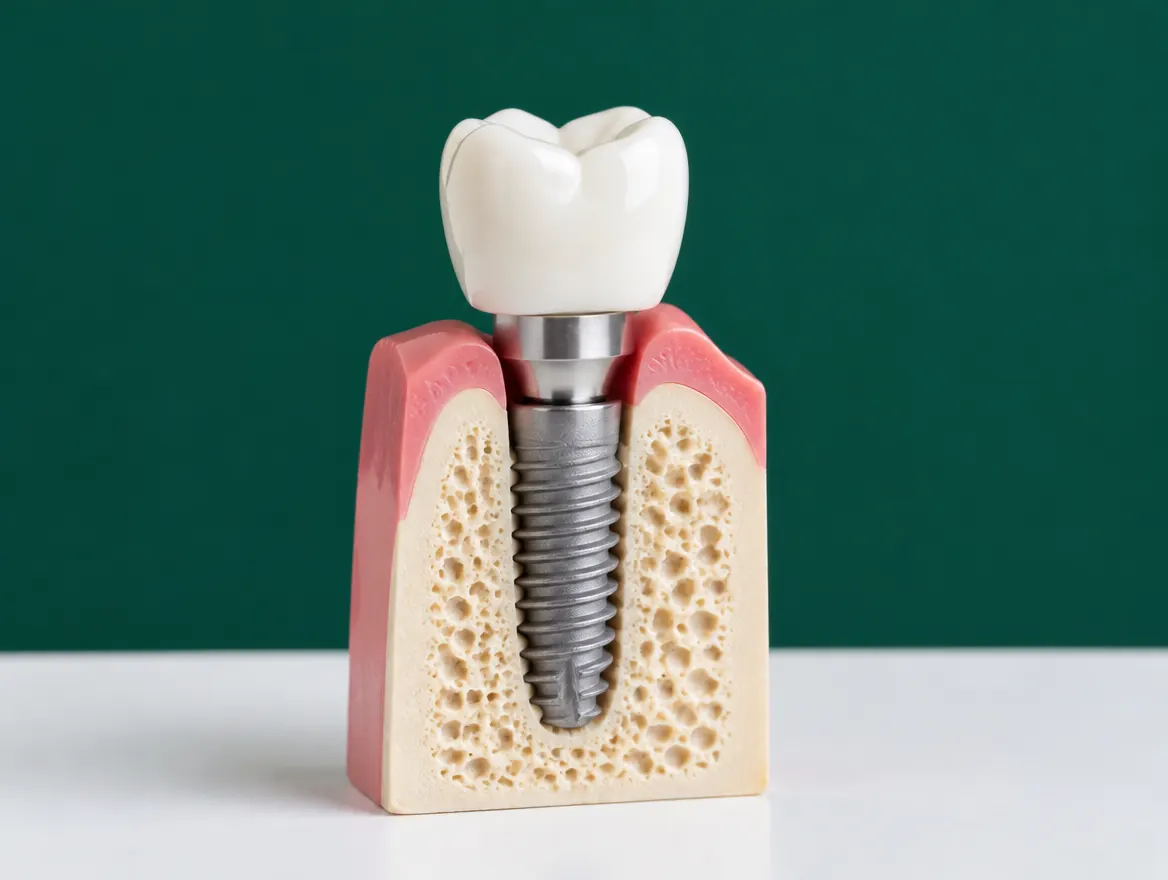 All-on-4 dental implants: how they work, and having them done in VietnamHow All-on-4 dental implants replace a full arch of teeth with a fixed bridge on four implants, what the studies show, and how to plan the trips to a clinic in Vietnam.
 Full mouth dental implants: your options comparedThe ways to replace all your teeth with implants, from individual implants to fixed full-arch bridges and removable implant dentures, and how to plan treatment in Vietnam.How long do dental implants last?How long dental implants last according to long-term studies, why the crown on top may need replacing before the implant, what raises the risk of failure, and how to look after an implant after treatment abroad.
 Dental implant healing stages, from extraction to final crownThe stages of dental implant treatment and healing, how long each one usually takes, when immediate loading is an option, and how the stages fit into two trips to Vietnam.