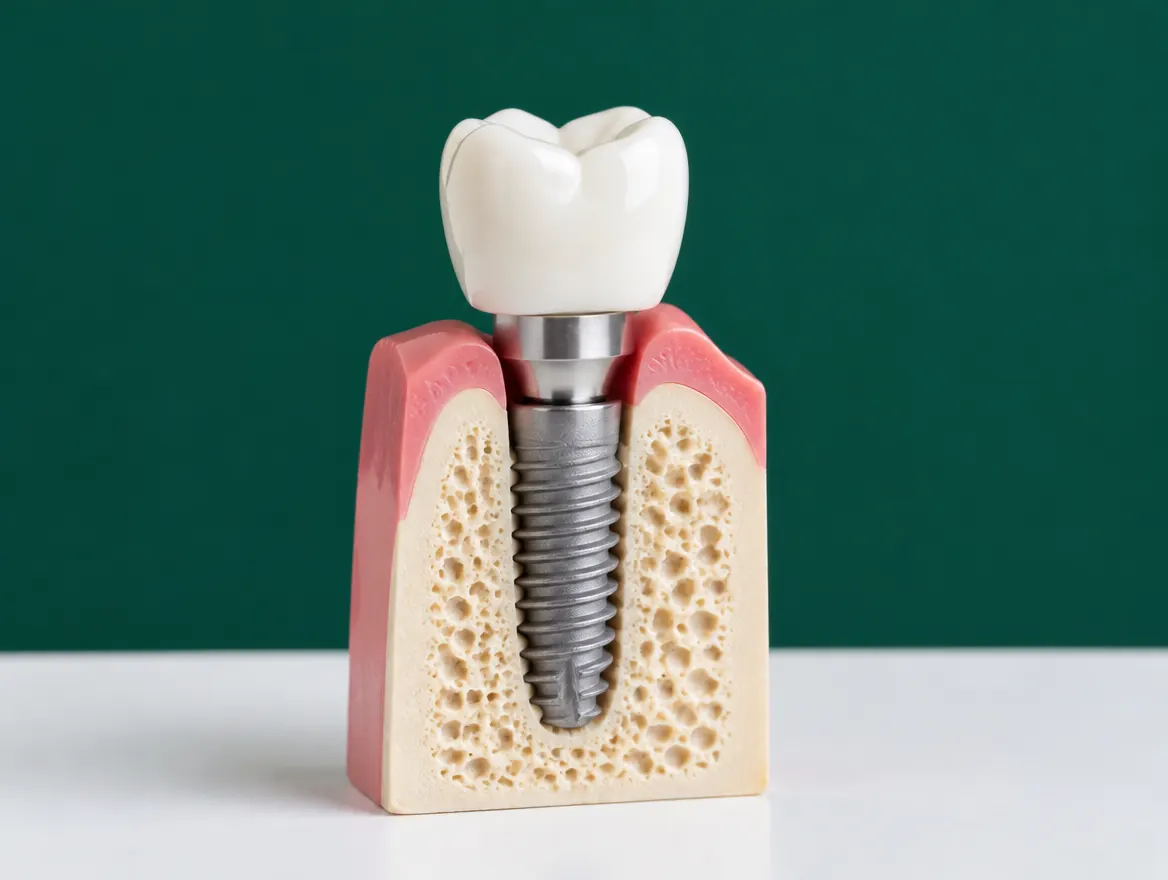
All-on-4 dental implants: how they work, and having them done in Vietnam
How All-on-4 dental implants replace a full arch of teeth with a fixed bridge on four implants, what the studies show, and how to plan the trips to a clinic in Vietnam.
Plan my tripKey points
- All-on-4 replaces a whole upper or lower arch of teeth with a fixed bridge held by four implants. You can't take it out yourself.
- The back two implants are usually tilted, which lets the surgeon use longer implants without placing them straight up into the jaw.
- Most clinics fit a temporary fixed bridge within a day of surgery. In one study, the temporary bridge was swapped for the final one after about 3 months.
- Large studies report high implant survival, with more failures in the upper jaw than the lower.
- Plan for at least two trips to Vietnam, and get your CBCT scan reviewed before you book flights.
All-on-4 dental implants replace every tooth in one jaw with a fixed bridge held by four implants. The two front implants usually go in straight and the two back ones are tilted. Most clinics fit a temporary fixed bridge within about a day of surgery, then replace it with the final bridge once you've healed. Because there are two stages, a trip to Vietnam for All-on-4 usually means at least two visits.
All-on-4 is one of several ways to replace a full arch. If you're still comparing options, read our guide to full mouth dental implants first, and get a CBCT scan reviewed before you plan anything else.
How All-on-4 works
All-on-4 was developed as a way to give people a fixed set of teeth on the day of surgery, using a small number of implants. A study of the method describes the basic plan: four implants per jaw, with angled connectors on the tilted back implants, and a fixed bridge attached the same day.
Tilting the back implants does two things, according to the same study. It lets the surgeon place a longer implant than would fit straight up, and it shortens the part of the bridge that sticks out behind the last implant, which is better for the bite.
The bridge is screwed to the implants. You can't take it out at home, and you clean it in your mouth like natural teeth, with extra attention around the implants.
| Stage | What happens | When |
|---|---|---|
| Planning | Exam, X-rays and a CBCT scan, medical history, treatment plan | Before or at the start of trip 1 |
| Surgery | Any remaining teeth removed, four implants placed | Trip 1 |
| Temporary bridge | A fixed temporary bridge is attached | Within about a day of surgery |
| Healing | The bone grows around the implants | Months. One study allowed 3 months |
| Final bridge | The temporary bridge is replaced with the final one | Trip 2 |
| Maintenance | Check-ups and professional cleaning | For as long as you have the bridge |
The American Dental Association explains that the bone grows around an implant and holds it in place, a process that can take up to several months before the final teeth go on.
What the studies show
Most of the long-term evidence for All-on-4 comes from large clinic studies that look back at past patients, so the results reflect experienced teams.
- Japan, up to 17 years. A study of 561 jaws and 2,364 implants found implant-level survival of 97.4% in the upper jaw and 98.9% in the lower jaw. The upper jaw was the biggest risk factor for failure, and most upper-jaw failures happened in the first 24 months.
- Temporary or final bridge on day one. A study of 126 patients found implant survival of 98.2%. The most common problem in the first 3 months was chipped or broken teeth on the bridge, which happened with both temporary and final bridges.
- Four or six implants. A Lisbon study of 943 patients found similar survival with four or six implants, 98.4% and 98.7% at 5 years. The authors note it came from one clinic and one experienced surgeon.
These are good numbers, but they come from specialist centres. Ask your clinic how many full-arch cases its surgeon has done, and what happens if an implant fails.
Who All-on-4 suits
All-on-4 is usually considered for people who have lost most or all of the teeth in a jaw, or whose remaining teeth can't be saved. The ADA says good general health matters more than age, and that chronic illnesses such as diabetes or leukaemia may interfere with healing. Tobacco use can slow healing too.
Tell the surgeon about every medical condition and medicine. Some patients need a check by their own doctor before surgery. Older patients should read our guide to dental implants for seniors, which covers medicines and health conditions.
Planning All-on-4 in Vietnam
Send your records first. A recent panoramic X-ray or CBCT scan lets the clinic say whether All-on-4 is suitable and how many trips you'll need. Our guide to dental X-rays and scans explains which files to ask for.
Plan two trips. The first trip covers the exam, scan, extractions, implant surgery and temporary bridge. The second trip, months later, is for the final bridge. Planning your visits shows how an implant trip is usually laid out day by day, and the trip planner builds a sample schedule.
Leave time to recover before you fly. Full-arch surgery is a bigger operation than a single implant. Read flying after dental treatment and ask the surgeon when it's safe to fly.
Eat soft food. The ADA suggests soft foods, cold foods and warm soup while you heal. Your temporary bridge also needs care, as chipping was a common early problem in the research. What to eat after dental surgery lists soft Vietnamese dishes.
Questions to ask the clinic
- Who will place the implants, and how many full-arch cases have they done?
- Which implant system do you use? Can dentists in my home country service it?
- What is the temporary bridge made of, and what is the final bridge made of?
- When will you fit the final bridge, and how long should the second trip be?
- Do I need extractions, bone grafts or other procedures first?
- What does the warranty cover, and what happens if an implant fails after I'm home?
- Which records will I take home: scans, implant details and treatment notes?
Every clinic listed on VietDentalTrip has had its licence, lead dentist and address checked. See how we verify clinics, and ask for a written plan and itemised quote before you book.
Frequently asked questions
What are All-on-4 dental implants?
A way of replacing all the teeth in one jaw with a fixed bridge supported by four implants. The two front implants usually go in straight and the two back implants are tilted. The bridge is screwed to the implants, so only a dentist can remove it.
Do you get teeth on the same day with All-on-4?
Usually yes. Most All-on-4 treatment includes a temporary fixed bridge fitted within about a day of surgery. The final bridge comes later, once the gums and bone have healed. One study replaced the temporary bridge after 3 months.
How long do All-on-4 implants last?
Studies with long follow-up report high survival. A Japanese study of 561 jaws followed for up to 17 years found implant-level survival of 97.4% in the upper jaw and 98.9% in the lower jaw. Results depend on the patient, the surgeon and how well the bridge is cared for.
Is All-on-4 better than All-on-6?
A Portuguese study of 943 patients found similar implant survival with four or six implants over 2 to 5 years. Your surgeon will recommend a number based on your bone and bite. Ask why they suggest four or six.
How many trips to Vietnam do I need for All-on-4?
Plan for at least two. The first covers the scan, any extractions, the implant surgery and the temporary bridge. The second, months later, is for the final bridge. Ask the clinic for its exact schedule before you book.
Can I have All-on-4 if I've lost bone?
Often, as tilting the back implants lets the surgeon place longer implants. Some patients still need extra procedures. A CBCT scan shows how much bone you have, and the surgeon decides from that.
Who isn't suitable for All-on-4?
The ADA says chronic illnesses such as diabetes or leukaemia may interfere with healing, and tobacco can slow it. Tell the surgeon about every condition and medicine. They may ask your doctor to check you first.
What should I ask a clinic about All-on-4?
Who places the implants and how many full-arch cases they've done, which implant system they use, what the temporary and final bridges are made of, how many trips you'll need, and what the warranty covers once you're home.
Sources
- American Dental Association (MouthHealthy). Dental implants.
- International Journal of Implant Dentistry (PMC). The All-on-four concept for fixed full-arch rehabilitation of the edentulous maxilla and mandible: a longitudinal study in Japanese patients with 3 to 17 year follow-up.
- International Journal of Implant Dentistry (PMC). Evaluation of the surgical and prosthetic success of All-on-4 restorations: provisional vs. definitive immediate restorations.
- PMC. Four vs. six implant full-arch restorations: a direct comparative retrospective analysis.
This article is general information, not medical advice. A dentist who has examined you is the right person to recommend treatment.
More in Dental care in Vietnam: Dental implants explained
See all Full mouth dental implants: your options comparedThe ways to replace all your teeth with implants, from individual implants to fixed full-arch bridges and removable implant dentures, and how to plan treatment in Vietnam.
 Implant-supported dentures and snap-on dentures: how they workHow implant-supported and snap-on dentures clip onto implants, how many implants they need, the attachment types, the upkeep, and how treatment in Vietnam is planned.How long do dental implants last?How long dental implants last according to long-term studies, why the crown on top may need replacing before the implant, what raises the risk of failure, and how to look after an implant after treatment abroad.
 Dental implant healing stages, from extraction to final crownThe stages of dental implant treatment and healing, how long each one usually takes, when immediate loading is an option, and how the stages fit into two trips to Vietnam.