Things to do in Ho Chi Minh City between dental appointments
What to see and do in Ho Chi Minh City on a dental trip, from short walks on treatment days to the Củ Chi tunnels and Mekong Delta on free days.
Plan my tripKey points
- Match each outing to the day. Keep treatment days to short walks near your hotel, and save day trips for lab days or the end of your stay.
- The French-era sights, Bến Thành Market and the War Remnants Museum are all in the centre, close to where many clinics are.
- The Củ Chi tunnels and Mekong Delta boat trips are full days out. Don't book them in the days after surgery.
- Saigon's food is a highlight, but bánh mì and cơm tấm are best left until you can chew comfortably.
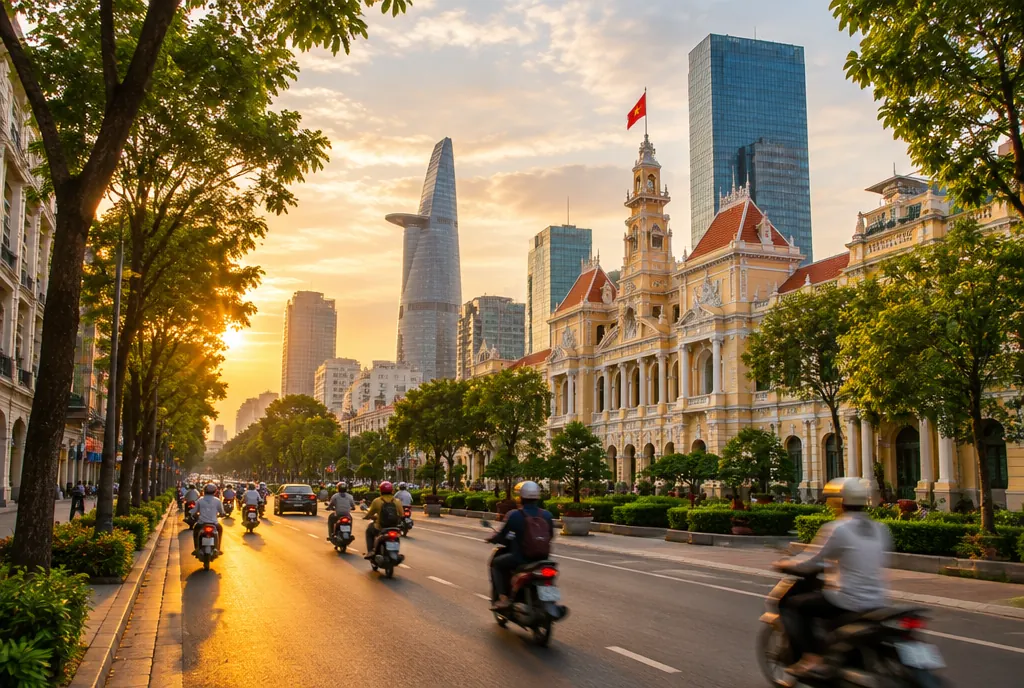
The best things to do in Ho Chi Minh City on a dental trip are the ones that fit around your appointments. On treatment days, stay close to your hotel: the Central Post Office, the Notre-Dame Cathedral, Bến Thành Market and Nguyễn Huệ walking street are all in the centre. On free days, visit the War Remnants Museum, Independence Palace or Chợ Lớn. Save the big day trips, the Củ Chi tunnels and the Mekong Delta, for days well away from any surgery.
Ho Chi Minh City, still widely called Saigon, has the largest number of dental clinics in Vietnam, and many sit in the same central streets as the main sights. That makes it easy to fit sightseeing between visits. This guide groups things to do by how active you can be, so you can plan each day around the clinic instead of the other way round.
Plan outings around your treatment
Most treatment trips have three kinds of day:
- Treatment days. You're at the clinic for an hour or more, and you may be numb or tired afterwards. Plan short walks and a quiet evening.
- Lab days. While the lab makes your crowns or veneers, the clinic often doesn't need you for a day or two. These are good days for a museum or a neighbourhood walk.
- Free days at the end. Once your final check is done, longer trips are fine.
After extractions or implant surgery, rest for at least the first day and stay close to the hotel for the next few. Our planning guide shows typical schedules, and the trip planner builds a sample day-by-day trip for Ho Chi Minh City.
Things to do at a glance
| Activity | Area | Good on a treatment day? | Notes |
|---|---|---|---|
| Central Post Office and Notre-Dame Cathedral | Centre (former District 1) | Yes | Short walk, next door to each other |
| Nguyễn Huệ walking street | Centre (former District 1) | Yes | Wide pedestrian street, good for an evening stroll |
| Bến Thành Market | Centre (former District 1) | Yes, briefly | Busy and crowded, keep valuables close |
| War Remnants Museum | Xuân Hòa ward (former District 3) | Better on a free day | Graphic content |
| Independence Palace | Bến Thành ward | Better on a free day | Indoor rooms plus gardens |
| Chợ Lớn and the Jade Emperor Pagoda | Former District 5, and the centre | Lab day | Best explored on foot |
| Củ Chi tunnels | Củ Chi, outside the centre | No, full day | Wait until you've healed after surgery |
| Mekong Delta boat trip | Mekong Delta | No, full day | Cần Thơ is about three hours by road |
Gentle outings for treatment days
The Central Post Office. Built between 1886 and 1891 under French rule, it stands next to the cathedral on Paris Commune Square. Inside are two painted maps from soon after it opened, one of greater Saigon and one of telegraph lines in southern Vietnam and Cambodia. It's a short, shaded visit that suits an afternoon after a check-up.
The Notre-Dame Cathedral. Vietnam's official tourism site suggests walking down Đồng Khởi street to reach it. Combine it with the post office and you've seen two of the city's best-known French-era buildings in under an hour.
Nguyễn Huệ walking street. This was the city's first pedestrian street when it opened in 2015. It runs through the centre and is a calm place for an evening walk, away from the motorbikes. Old buildings such as 42 Nguyễn Huệ are full of small shops.
Bến Thành Market. The market has around 1,500 stalls selling everything from everyday goods to luxury items, with food stalls by the northern gate, and it draws more than 10,000 visitors a day. After 6pm it becomes a night market, with more food stalls, until about 10pm. It's crowded, and the UK government warns that bag snatchers work in busy tourist areas, so carry only what you need.
The riverside. A walk along the Saigon River in the evening, when it's cooler, is an easy way to end a treatment day.
Fuller days for lab days
The War Remnants Museum. At 28 Võ Văn Tần Street, in what is now Xuân Hòa ward, the museum covers the First Indochina War and the Vietnam War in themed rooms, with military equipment in the yard outside. It includes graphic photographs of the effects of Agent Orange, napalm and the My Lai massacre. Allow time, and go on a day when you're feeling well.
Independence Palace. Officially called the Reunification Hall, the palace at 135 Nam Kỳ Khởi Nghĩa Street is where a tank broke through the main gate on 30 April 1975, effectively ending the war. Visitors can see the former presidential office, the banquet and cabinet rooms, the war room underneath the palace, and a tank in the gardens.
Chợ Lớn. The city's Chinese neighbourhood is, in the words of Vietnam's tourism site, great for exploring on foot. It's a lab-day outing, as it involves a fair amount of walking.
The Jade Emperor Pagoda. The official tourism site picks it out, with Bến Thành Market, as worth a visit for a more local side of the city.
Day trips from Ho Chi Minh City
Day trips are long, mostly by road, and often start early. Book them for lab days after a non-surgical treatment, or for the end of your stay.
The Củ Chi tunnels. The tunnel network lies in Củ Chi, on the outskirts of Ho Chi Minh City. There are two visitor sites. Bến Đình is closer to the city and has reconstructed tunnels. Bến Dược contains part of the original system. Visitors can crawl through the safer sections, and some tunnels have been enlarged for tourists, but it's still cramped, hot and physical. Skip it until you've healed if you've had extractions or implant surgery.
The Mekong Delta. Vietnam's official tourism site describes touring the delta's islets by bicycle or sampan, gliding through canals, and visiting fruit orchards and rice paper villages. Floating markets, such as Cái Răng near Cần Thơ, are busiest early in the morning. Cần Thơ is about three hours by road from Ho Chi Minh City, so a day trip is long. The dry season, from December to April, suits boat trips, and fruit orchards are at their best from May to August.
On any day trip, take water, your medication and your clinic's phone number. If you've had treatment in the last few days, sit in the car rather than on a motorbike, and avoid rough boat rides.
Eating out in Saigon while you heal
Ho Chi Minh City is one of Vietnam's best food cities. The tourism site recommends bánh mì, bánh xèo (savoury pancakes) and cơm tấm (broken rice). All three need proper chewing, and bánh mì has a hard crust, so keep them for after your final check.
In the first days after treatment, choose soft dishes: cháo (rice porridge), hủ tiếu (a clear noodle soup common in the south), and phở with the broth left to cool. Ask for không cay (not spicy). Our guide to soft food after dental work lists what to order and what to avoid.
Getting around
Ride-hailing apps are the simplest way to move between your hotel, the clinic and the sights. The UK government advises using official apps such as Grab and Xanh SM. After surgery or sedation, always take a car, not a motorbike. Metro Line 1, which opened in 2024, runs from Bến Thành to Suối Tiên. Our guide to getting around Vietnam covers apps, taxis and safety.
A note on addresses
In July 2025 Vietnam removed its district level of local government. Ho Chi Minh City is now divided into wards and communes, and the old numbered districts no longer exist officially. The former District 1, for example, is now Sài Gòn, Bến Thành, Tân Định and Cầu Ông Lãnh wards. Many hotels, guides and clinics still use the old district names, so you'll see both. Check your clinic's address on a map before you book a hotel, and read where to stay in Ho Chi Minh City for help choosing an area.
When you're ready to compare treatment options, see the Ho Chi Minh City guide and the verified clinics in Ho Chi Minh City.
Frequently asked questions
What is there to do in Ho Chi Minh City?
The centre has French-era buildings such as the Notre-Dame Cathedral and the Central Post Office, Bến Thành Market, the War Remnants Museum and Independence Palace. Further out, Chợ Lớn, the city's Chinese neighbourhood, is good for walking, and day trips run to the Củ Chi tunnels and the Mekong Delta.
What can I do on the day of my dental appointment?
Keep it short and close to your hotel. A walk to the Central Post Office or along Nguyễn Huệ walking street is plenty. After surgery or sedation, go straight back to the hotel by car and rest.
Can I visit the Củ Chi tunnels after dental treatment?
After a check-up, crowns or veneers, usually yes. After extractions or implant surgery, wait until your dentist says you're healing well. It's a long day out, and visitors can crawl through parts of the tunnels, which isn't comfortable while you're sore.
How far is the Mekong Delta from Ho Chi Minh City?
Vietnam's official tourism site says Cần Thơ, the main city of the delta, is about three hours by road from Ho Chi Minh City. Closer stops make shorter day trips possible, but either way it's a full day.
Is the War Remnants Museum suitable for everyone?
It covers the First Indochina War and the Vietnam War and includes graphic photography, for example of Agent Orange and napalm victims. Some visitors find it upsetting, so decide in advance whether it suits you and anyone travelling with you.
What should I eat in Ho Chi Minh City after dental work?
In the first days, soft dishes such as cháo (rice porridge), hủ tiếu and phở with cooled broth. Bánh mì, bánh xèo and cơm tấm are southern favourites, but leave them until you can chew normally. Our soft food guide has a full list.
Is Saigon the same as Ho Chi Minh City?
Yes. Many people still call it Saigon. Since 2025 one of the central wards made from the former District 1 is officially named Sài Gòn ward.
When is the best time of year to visit Ho Chi Minh City?
The dry season runs from December to April and the rainy season from May to November. Treatment works the same all year. In the wet months, plan outings for the morning and keep a rain jacket handy.
Sources
- Vietnam National Authority of Tourism (vietnam.travel). Ho Chi Minh City.
- Vietnam National Authority of Tourism (vietnam.travel). Mekong Delta.
- Vietcetera. A post-merger guide to Ho Chi Minh City.
- Wikipedia. Ho Chi Minh City.
- Wikipedia. Củ Chi tunnels.
- Wikipedia. War Remnants Museum.
- UK Foreign, Commonwealth & Development Office. Vietnam travel advice, safety and security.
This article is general information, not medical advice. A dentist who has examined you is the right person to recommend treatment.
More in Travel in Vietnam: City guides
See all Things to do in Hanoi between dental appointmentsWhat to see and do in Hanoi on a dental trip, sorted by how active you can be, from a lakeside walk on treatment days to Ha Long Bay on a free day.Where to stay in Hanoi for a dental tripThe best areas to stay in Hanoi on a dental trip, compared by distance to clinics, noise, food and how well they suit recovery, plus getting in from Noi Bai airport.Where to stay in Ho Chi Minh City for a dental tripThe best areas to stay in Ho Chi Minh City for a dental trip, how to choose by distance to your clinic and quiet for recovery, and getting in from Tan Son Nhat airport.
 Things to do in Da Nang between dental appointmentsThe best things to do in Da Nang on a dental trip, sorted by how active you can be: gentle outings on treatment days, day trips to Hoi An and Huế on free days, and the beach once you've healed.