
Dental implant healing stages, from extraction to final crown
The stages of dental implant treatment and healing, how long each one usually takes, when immediate loading is an option, and how the stages fit into two trips to Vietnam.
Plan my tripKey points
- Dental implant treatment has five main stages: planning, extraction (if needed), implant placement, healing (osseointegration), and the abutment and crown.
- The implant can go in on the day of an extraction, a few weeks later, or after the socket has fully healed. The right timing depends on the bone and any infection.
- Bone usually needs months to grow around an implant. One classic protocol allows 3 to 4 months in the lower jaw and 6 to 8 months in the upper jaw.
- Immediate loading means a tooth goes on within about a week of surgery. It suits some cases with a very stable implant, and you still need a final crown later.
- In Vietnam this usually means two trips: about 9 days for placement and about 7 days for the crown, 3 to 6 months apart.
Dental implant treatment happens in stages, and most of the time is spent waiting for bone to heal. The main dental implant healing stages are planning, removing the tooth if needed, placing the implant, letting the bone grow onto it (osseointegration), and fitting the abutment and final crown. From placement to final crown usually takes a few months. One classic protocol allows 3 to 4 months of healing in the lower jaw and 6 to 8 months in the upper jaw. A bone graft or sinus lift adds more time.
For a patient travelling to Vietnam, this usually means two trips: one to place the implant and one, 3 to 6 months later, for the crown. Here is what happens at each stage and how long it takes.
The stages at a glance
| Stage | What happens | Typical time |
|---|---|---|
| 1. Planning | Examination, X-rays and a 3D CBCT scan | First days of trip 1 |
| 2. Extraction (if needed) | The damaged tooth is removed | Same day as placement, or weeks to months before |
| 3. Bone graft (if needed) | Bone is built up where it's too thin | 4 to 12 months of healing, unless done with the implant |
| 4. Implant placement | The post is placed in the jawbone under local anaesthetic | One appointment |
| 5. Osseointegration | Bone grows onto the implant | About 3 to 4 months (lower jaw) or 6 to 8 months (upper jaw) in a classic protocol |
| 6. Abutment and crown | The connector and final tooth are fitted | Trip 2, about a week |
The times in this table come from the research and patient guides listed below. Your surgeon sets your own timeline after examining you and seeing the scan.
Stage 1: planning and scans
Everything starts with a 3D picture of the jaw. A CBCT scan shows how much bone there is, where the nerves and sinuses are, and whether you need a graft. Send the clinic your recent X-rays before you travel so it can give you a provisional plan. Our guide to dental X-rays and CBCT scans explains which images to send.
Stage 2: extraction, and when the implant goes in
If a tooth needs to come out, the implant can go in at different times. A 2019 meta-analysis in the Journal of Periodontology uses three main groups:
| Timing | When the implant goes in |
|---|---|
| Immediate placement | Into the fresh socket, on the day of the extraction |
| Early placement | About 3 to 8 weeks after the extraction, once the gum has covered the socket |
| Delayed placement | 12 weeks or more after the extraction |
The meta-analysis found early placement gave results similar to the other approaches, and better stability of the bone around the implant than immediate placement. A 2023 literature review describes delayed placement as waiting at least 6 months for the bone to heal fully. Definitions vary between studies, so ask your surgeon which approach they plan and why.
For a trip abroad, timing matters. If the tooth comes out on trip 1 and the implant goes in later, you may need an extra trip. Ask the clinic to plan around the number of trips you can make.
Stage 3: bone grafts and sinus lifts
When the jaw is too thin or too short to hold an implant, the surgeon builds it up first. The American Academy of Periodontology says grafted bone is usually allowed to develop for 4 to 12 months before implants are placed, although sometimes the implant goes in at the same time as the graft. See our guide to sinus lifts and bone grafts for how these work and how they change your travel plans.
Stage 4: placing the implant
The implant is placed under local anaesthetic. On our sample schedule, the clinic checks healing a few days later, before you fly. A 2023 review in the British Dental Journal suggests waiting about 72 hours after an uncomplicated implant placement before flying, provided there's no pain, swelling or bleeding.
Stage 5: osseointegration
This is the longest stage. The American Dental Association says bone grows around the implant after surgery, and some patients wait up to several months for it to integrate completely. A literature review in the Journal of Dental Sciences cites a classic protocol that avoids loading the implant for about 3 to 4 months in the lower jaw and 6 to 8 months in the upper jaw. During this time you go home, follow your clinic's aftercare instructions and keep the area clean.
Immediate loading: a tooth within a week
Some clinics offer immediate loading. Following a 2014 international consensus, a 2019 systematic review defines it as fitting the tooth within one week of placing the implant. That review of 34 studies and 5,349 implants found a mean implant survival of 97.4% after an average of about six years, and concluded immediate loading is predictable under well-defined circumstances.
The key condition is primary stability: how firmly the implant sits in the bone on the day of surgery. Surgeons measure this with insertion torque and resonance frequency tests, according to the 2023 review. If the implant isn't stable enough, the surgeon will wait. The tooth fitted on the day is usually temporary, so you still return for the final crown.
Stage 6: abutment and final crown
Once the implant has integrated, the clinic fits the abutment, takes a scan or impression, and makes the crown. After it's fitted, a short visit checks your bite. On our sample schedule this takes about a week.
How the stages fit two trips to Vietnam
| Trip | Typical length | What happens |
|---|---|---|
| Trip 1 | About 9 days | Exam and CBCT scan, implant placement, rest, a healing check, then the flight home |
| Healing at home | 3 to 6 months | The bone integrates with the implant; see your dentist if anything feels wrong |
| Trip 2 | About 7 days | Abutment and scan, crown fitted, bite check, then the flight home |
These lengths match the sample implant schedule in our trip planner, which shows each day of both trips in your chosen city. A graft, sinus lift or several implants can make either trip longer. Planning your visits explains how to plan around them, and dental implants covers the treatment in more detail.
Questions to ask your surgeon
- Will the implant go in on the day of the extraction, or later?
- Do I need a bone graft or sinus lift, and will it be done at the same time?
- How long do you expect the bone to take to heal in my case?
- Is immediate loading an option for me, and is the first tooth temporary?
- When is it safe for me to fly home?
- What should I do, and who should I contact, if something feels wrong between trips?
Frequently asked questions
What are the stages of dental implant healing?
After the implant is placed, the bone grows onto it over the following months. This bonding is called osseointegration. Once the implant is stable, the abutment and final crown go on. Before that, you may need an extraction and sometimes a bone graft, which add their own healing time.
How long does it take for a dental implant to heal?
The ADA says some patients wait up to several months for the implant to fully integrate with the bone. A classic protocol allows 3 to 4 months in the lower jaw and 6 to 8 months in the upper jaw. Your surgeon decides based on your bone and how stable the implant is.
Can an implant be placed on the same day as an extraction?
Sometimes. This is called immediate placement. Research reviews describe it as more technically demanding than waiting, and it isn't suitable when there's infection or too little bone. Many surgeons wait a few weeks or a few months instead.
What is immediate loading?
Fitting a tooth on the implant within about a week of placing it, instead of waiting months. A 2019 systematic review found it works well under well-defined conditions, mainly when the implant is very stable in the bone. The first tooth is usually temporary.
Can I get an implant and a permanent crown in one trip to Vietnam?
Usually not. The bone needs months to heal before the final crown goes on. Even with immediate loading, you normally come back for the permanent crown.
How long after implant surgery can I fly home?
A 2023 review in the British Dental Journal suggests about 72 hours after an uncomplicated implant placement, provided there's no pain, swelling or bleeding. After a sinus lift or bone graft it suggests at least two weeks. Ask your surgeon before you book.
Does a bone graft add time?
Yes. Grafted bone is usually given 4 to 12 months to develop before an implant can go in, according to the American Academy of Periodontology, although sometimes the implant is placed at the same time as the graft.
Sources
- American Dental Association (MouthHealthy). Dental implants.
- Bassir et al., Journal of Periodontology (2019). Outcome of early dental implant placement versus other dental implant placement protocols: a systematic review and meta-analysis.
- Huang et al., Journal of Dental Sciences (2023). Primary stability of implant placement and loading related to dental implant materials and designs: a literature review.
- Del Fabbro et al., Journal of Clinical Medicine (2019). A systematic review of survival rates of osseointegrated implants in fully and partially edentulous patients following immediate loading.
- American Academy of Periodontology. Sinus augmentation.
- Felkai et al., British Dental Journal (2023). Dental tourism and the risk of barotrauma and barodontalgia.
This article is general information, not medical advice. A dentist who has examined you is the right person to recommend treatment.
More in Dental care in Vietnam: Dental implants explained
See all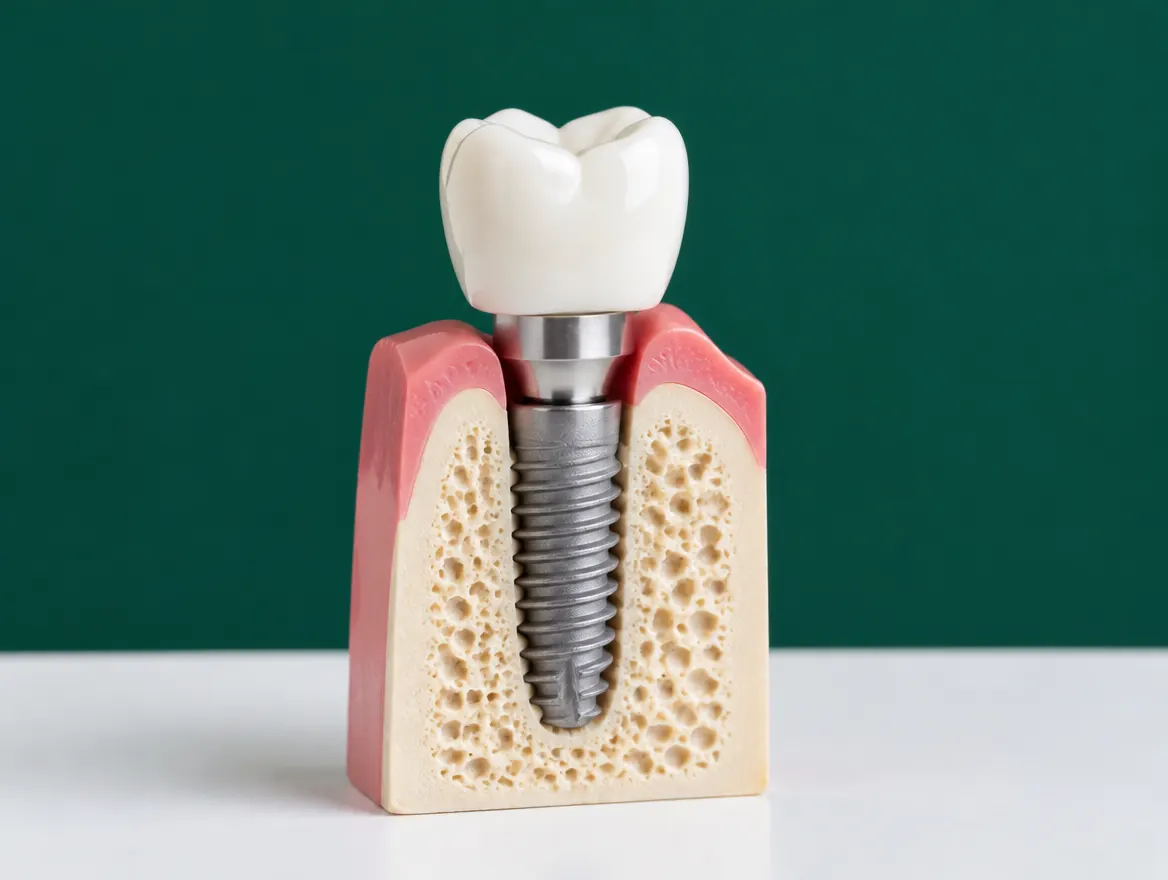 All-on-4 dental implants: how they work, and having them done in VietnamHow All-on-4 dental implants replace a full arch of teeth with a fixed bridge on four implants, what the studies show, and how to plan the trips to a clinic in Vietnam.
 Full mouth dental implants: your options comparedThe ways to replace all your teeth with implants, from individual implants to fixed full-arch bridges and removable implant dentures, and how to plan treatment in Vietnam.
 Implant-supported dentures and snap-on dentures: how they workHow implant-supported and snap-on dentures clip onto implants, how many implants they need, the attachment types, the upkeep, and how treatment in Vietnam is planned.How long do dental implants last?How long dental implants last according to long-term studies, why the crown on top may need replacing before the implant, what raises the risk of failure, and how to look after an implant after treatment abroad.