
Sinus lift and bone grafts before dental implants
Why some patients need a sinus lift or bone graft before implants, the types of procedure, how long the bone takes to heal, the risks, aftercare, and how a graft changes a dental trip to Vietnam.
Plan my tripKey points
- A sinus lift adds bone to the upper back jaw, under the sinus, when there isn't enough height to hold an implant. A ridge augmentation builds up a jaw that is too thin.
- Grafted bone usually needs 4 to 12 months to develop before implants go in, although some cases allow the implant to be placed at the same time.
- One NHS hospital leaflet gives 6 to 12 months, or longer, from a sinus lift to the final teeth.
- Don't blow your nose for two weeks after a sinus lift, and wait at least two weeks before flying, according to a 2023 British Dental Journal review.
- Plan the sinus lift at the start of a trip, and expect at least one more trip than a simple implant case.
A sinus lift is surgery that adds bone to the upper jaw, under the sinus, so there's enough height to hold a dental implant. A bone graft does the same job wherever the jaw is too thin or too short. You might need one before implants if you've lost bone after losing a tooth or through gum disease. The grafted bone usually needs 4 to 12 months to develop before the implant goes in, although sometimes both happen in one operation. After a sinus lift, don't blow your nose for two weeks, and wait at least two weeks before you fly.
This guide explains why grafts are needed, how the procedures work, how long healing takes, the risks, and how a graft changes your plans for treatment in Vietnam.
Why some people need more bone
An implant needs enough bone around it to stay stable. The American Academy of Periodontology (AAP) says bone loss from gum disease or tooth loss can leave too little bone in the upper back jaw, and calls it one of the most difficult areas for implants. The sinuses sit just above the roots of the upper back teeth, so there may be only a thin layer of bone left.
Elsewhere in the mouth, the AAP says deformities in the jaw can leave too little bone for implants. It lists gum disease, wearing dentures, developmental defects and injury as causes.
The surgeon finds this out from a 3D CBCT scan. That's why clinics ask for a scan, or take one, before they can confirm an implant plan. Our guide to dental X-rays and CBCT scans explains which images to send before you travel.
Types of procedure
| Procedure | What it does | Implant at the same time? |
|---|---|---|
| Sinus lift, external (lateral) approach, very little bone | Graft added from the cheek side to raise the sinus membrane | Usually no; the implant goes in once the bone has healed |
| Sinus lift, external approach, some bone | Same approach | Often yes |
| Sinus lift, internal approach, some bone | Sinus floor gently tapped up through the implant site | Usually yes, in the same visit |
| Ridge modification (augmentation) | Gum lifted and the gap filled with bone or a bone substitute to build up the jaw | Sometimes |
The three sinus lift types come from a Cambridge University Hospitals NHS leaflet. The ridge modification description comes from the AAP.
How a sinus lift is done
The AAP describes the external approach. The surgeon makes a cut in the gum to expose the bone, cuts a small circle in the bone, and lifts it into the sinus space "much like a trap door". The space underneath is filled with bone graft material, and the gum is closed.
The Cambridge leaflet says the surgery is normally done under local anaesthetic as an outpatient, isn't normally painful during the operation, and takes about 45 minutes to two hours. Stitches are usually taken out about a week later.
For a ridge augmentation, the AAP says the gum is lifted away from the ridge and the gap is filled with bone or a bone substitute before the gum is closed. Your surgeon can explain which graft material they plan to use and why.
How long healing takes
| Source | Healing time |
|---|---|
| American Academy of Periodontology (sinus lift and ridge modification) | Bone usually given 4 to 12 months before implants are placed |
| Cambridge University Hospitals NHS leaflet (external sinus lift) | About 4 to 9 months for the graft to join with your own bone |
| Same leaflet, whole treatment | Typically 6 to 12 months from the sinus lift to the final teeth, and it can be longer |
After the implant goes in, the bone needs more time to grow onto it before the final crown. Our guide to dental implant healing stages explains that stage.
Aftercare
The Cambridge leaflet gives this advice after a sinus lift:
- Don't blow your nose for two weeks.
- Use menthol steam inhalations three times a day for ten days.
- Take painkillers, and any antibiotics or decongestants you're prescribed.
- Go back about a week later to have stitches removed.
It also notes that smoking raises the risk of the graft failing. If you smoke, ask your surgeon how this affects your plan.
Risks
The Cambridge leaflet lists these risks:
| When | What can happen |
|---|---|
| Common, early | A tear in the sinus membrane, swelling, pain, numbness, bleeding, a blocked feeling in the sinus, short-lived dizziness |
| Less common, later | Infection, the graft becoming exposed or failing, not enough bone for implants |
| Rare but serious | Lasting numbness of the cheek or upper teeth, an opening between the sinus and mouth, long-term infection needing the graft removed |
The leaflet gives figures for each. For example, a membrane tear was reported in about 19% of external procedures and 3.8% of internal ones. Rates vary between surgeons and cases, so ask your surgeon about their own.
When to get help
The Cambridge leaflet advises contacting the clinic if:
- swelling or pain gets worse after two days, or doesn't ease over time
- bleeding hasn't stopped by two days, or is bright red and continuous
- you think the graft has moved after sneezing or blowing your nose
- you have a fever or feel generally unwell
Abroad, call your clinic first. Save its number before surgery and ask whether it has an out-of-hours contact.
Flying after a sinus lift
Changes in air pressure during a flight can affect the sinuses, and in the British Dental Journal review a sinus lift or bone graft has the longest suggested wait of any procedure listed. That 2023 review suggests waiting at least two weeks after a sinus lift or bone graft, provided there's no pain, swelling or bleeding. The summary of the same review mentions six weeks after a sinus lift, so the safe interval for you is your surgeon's decision. Read flying after dental treatment for the full table of waiting times.
How a graft changes a trip to Vietnam
A graft can add a trip, or at least make the first trip longer:
- Graft with the implant. If the surgeon can place the implant during the sinus lift, you may still manage two trips. The first trip needs to be long enough to allow at least two weeks after surgery before you fly.
- Graft first, implant later. If the bone needs to heal before the implant goes in, plan for a graft trip, an implant trip months later, and a crown trip after that.
Put the surgery at the start of the trip so the last two weeks are free for healing. Ask the clinic to confirm, from your scan, whether you'll need a graft before you book flights. Planning your visits explains how to plan trip length, and the trip planner shows a sample implant schedule. A bone graft or sinus lift makes your trip longer than the sample.
Questions to ask the surgeon
- Do I need a sinus lift or bone graft, and what does the scan show?
- Which approach will you use, and can the implant go in at the same time?
- Which graft material do you use?
- How many trips should I plan for, and how long should each one be?
- When is it safe for me to fly?
- What happens if the graft doesn't take?
Dental implants covers the rest of the treatment, from the first scan to the final crown.
Frequently asked questions
What is a sinus lift?
Surgery that adds bone to the upper jaw in the area of the back teeth. The sinus membrane is lifted and bone graft material is placed underneath, giving enough bone height for an implant. It's also called sinus augmentation.
Why would I need a sinus lift?
The American Academy of Periodontology says bone loss from gum disease or tooth loss can leave too little bone in the upper back jaw to place implants. A sinus lift builds that bone up.
Is a sinus lift painful?
One NHS hospital leaflet says it's normally done under local anaesthetic as an outpatient and is not normally painful during the operation. Swelling, pain, numbness and a blocked-up feeling in the sinus can follow, so you'll be given painkillers and aftercare instructions.
How long does a sinus lift take to heal?
Grafted bone is usually given 4 to 12 months to develop before implants go in, according to the American Academy of Periodontology. One NHS hospital leaflet gives 4 to 9 months for the graft to join with your own bone, and 6 to 12 months or longer to the final teeth.
Can the implant go in at the same time as the sinus lift?
Sometimes. If there's some bone already, the implant can often be placed in the same operation. If there's very little bone, the graft usually heals first and the implant goes in later.
How soon can I fly after a sinus lift?
A 2023 review in the British Dental Journal suggests waiting at least two weeks after a sinus lift or bone graft, provided there's no pain, swelling or bleeding. The same review's summary mentions six weeks after a sinus lift, so ask your surgeon for your own timing.
What are the risks of a sinus lift?
One NHS hospital leaflet lists a tear in the sinus membrane, swelling, pain, numbness, bleeding, a blocked feeling in the sinus and short-lived dizziness. Less often there can be infection, the graft becoming exposed or failing, or not enough bone for implants.
What is a bone graft for dental implants?
Bone or a bone substitute placed where the jaw is too thin or too short to hold an implant. When it's used to build up the ridge of the jaw, it's called ridge modification or augmentation.
Can I blow my nose after a sinus lift?
No, not for the first two weeks, according to one NHS hospital leaflet. Tell your surgeon if you think the graft may have moved after you sneezed or blew your nose.
Sources
- American Academy of Periodontology. Sinus augmentation.
- American Academy of Periodontology. Ridge modification.
- Cambridge University Hospitals NHS Foundation Trust. Sinus lift procedures.
- Felkai et al., British Dental Journal (2023). Dental tourism and the risk of barotrauma and barodontalgia.
- American Dental Association (MouthHealthy). Dental implants.
This article is general information, not medical advice. A dentist who has examined you is the right person to recommend treatment.
More in Dental care in Vietnam: Dental implants explained
See all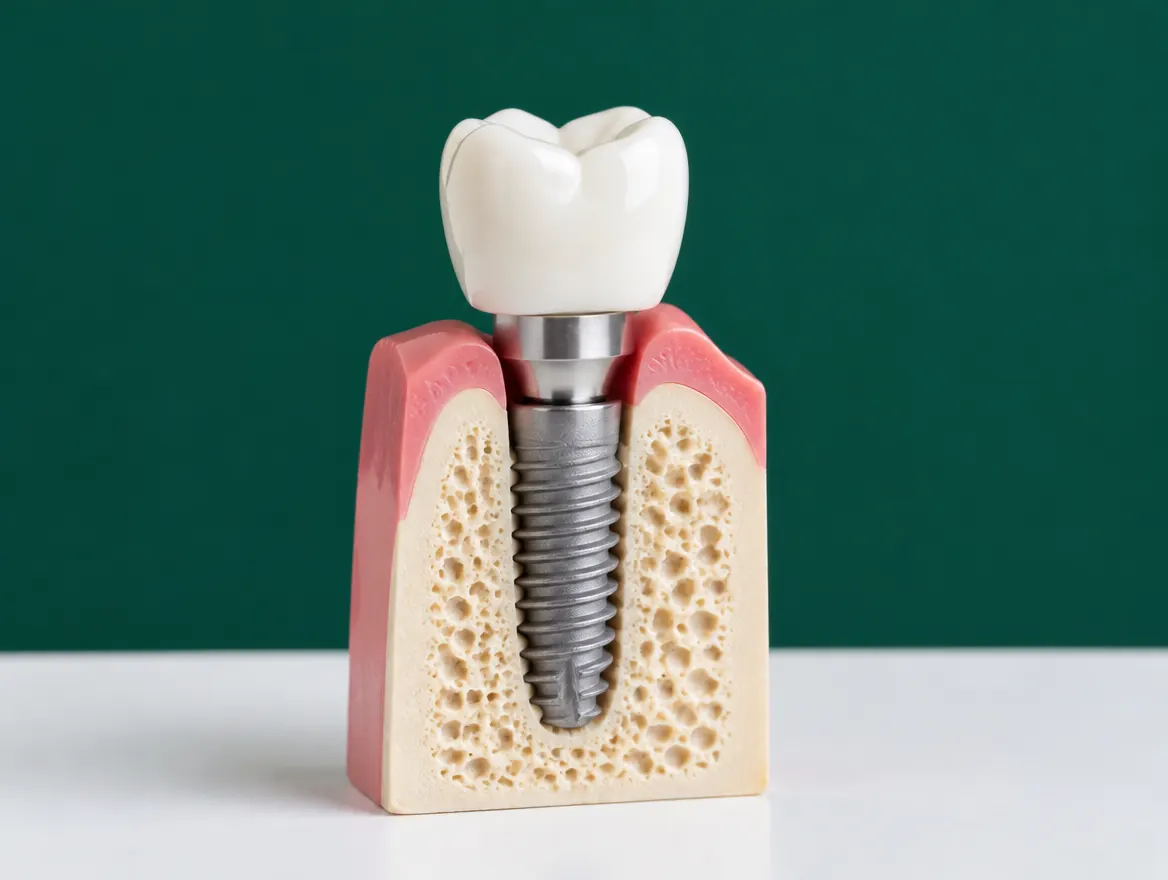 All-on-4 dental implants: how they work, and having them done in VietnamHow All-on-4 dental implants replace a full arch of teeth with a fixed bridge on four implants, what the studies show, and how to plan the trips to a clinic in Vietnam.Full mouth dental implants: your options comparedThe ways to replace all your teeth with implants, from individual implants to fixed full-arch bridges and removable implant dentures, and how to plan treatment in Vietnam.
 Implant-supported dentures and snap-on dentures: how they workHow implant-supported and snap-on dentures clip onto implants, how many implants they need, the attachment types, the upkeep, and how treatment in Vietnam is planned.How long do dental implants last?How long dental implants last according to long-term studies, why the crown on top may need replacing before the implant, what raises the risk of failure, and how to look after an implant after treatment abroad.